Silvia De Stoia develops a sculptural practice in which matter becomes a sensitive system. Working primarily with iron, her pieces explore the relationships between form, time, and memory, creating objects that seem to hold an inner, almost latent dimension. In her work, sculpture moves beyond volume to become rhythm, trace, and resonance—each piece suggesting its own temporality and a potential “voice.”
Trained at the Escuela Nacional de Bellas Artes Prilidiano Pueyrredón, where she graduated as a Professor of Sculpture, De Stoia has built a career that intertwines artistic production, research, and teaching. Her education is further expanded through postgraduate studies and specializations in contemporary art, alongside an ongoing pedagogical practice. This intersection between thinking and making informs a body of work that investigates both materiality and the systems of meaning it can generate.
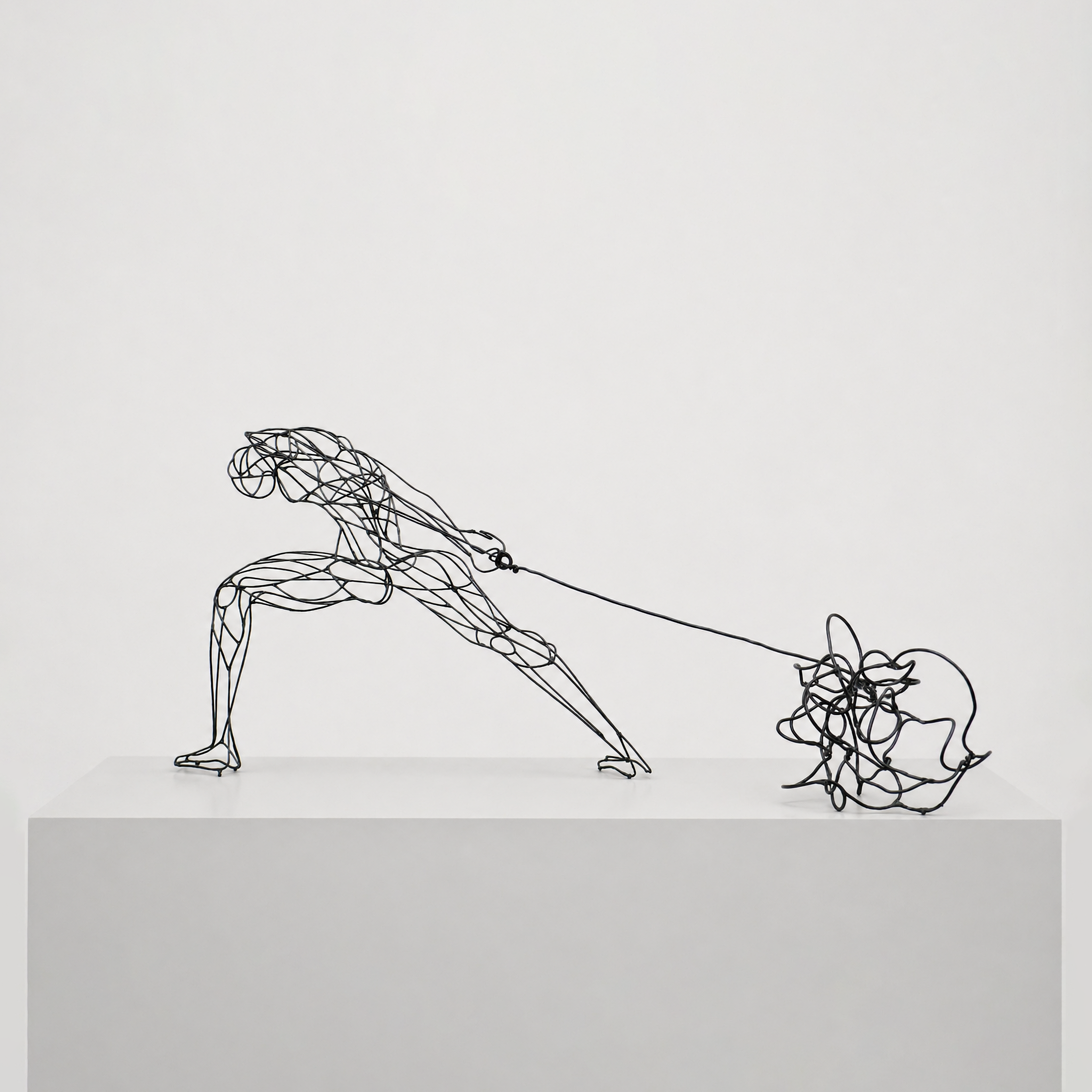
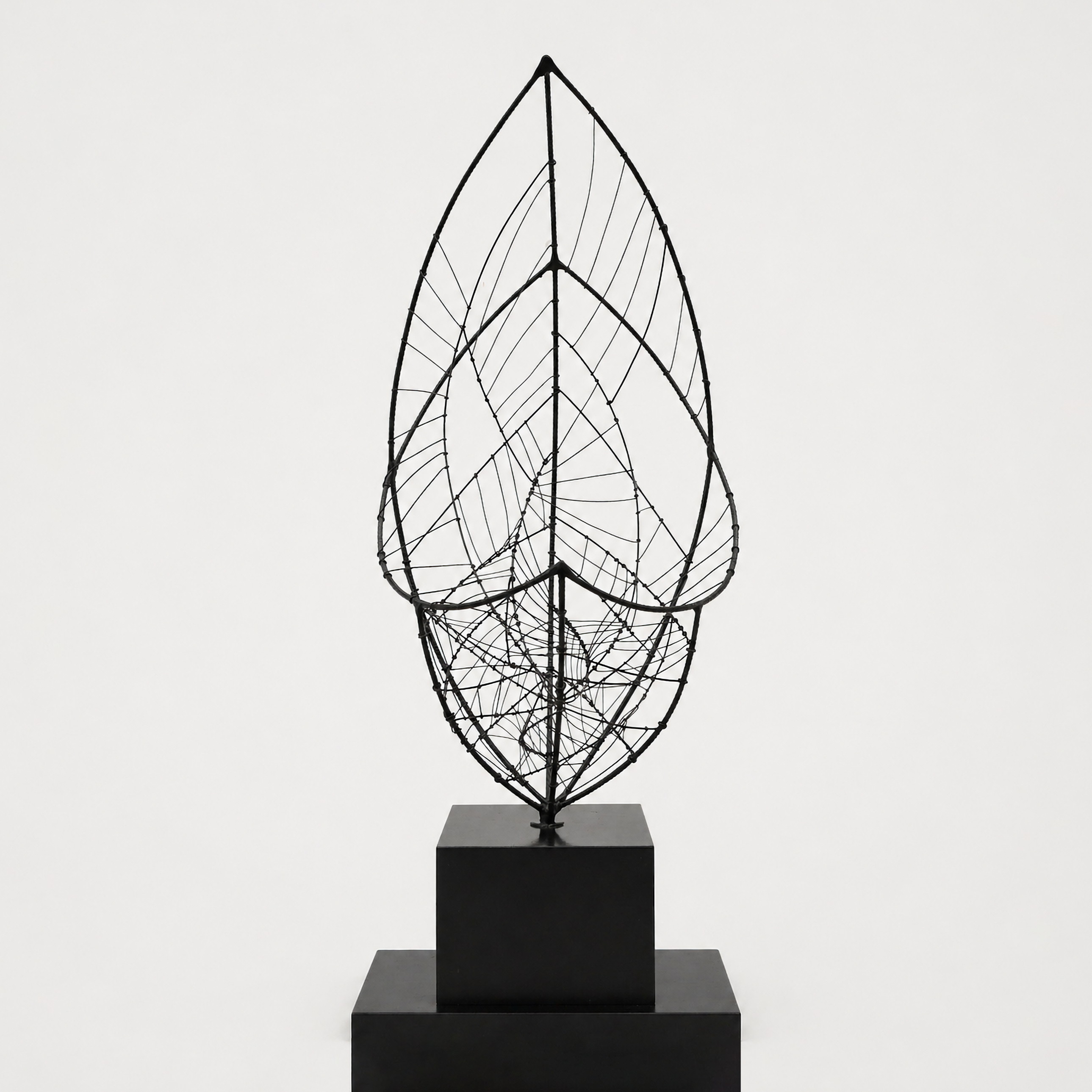
Her production is structured around conceptual frameworks that unfold across different series. In Sonido Propio, sculpture extends into installation through the incorporation of musical scores, text, and structures that reference sound, proposing a translation between auditory and visual languages. In Reminiscencias, iron and photography articulate a reflection on memory and the persistence of the past within matter. Across her work, objects take on a mechanical or instrumental quality—boxes, structures, assemblages—evoking poetic devices in which time, repetition, and rhythm become central.
She has presented solo exhibitions at venues such as the Casa Museo Rogelio Yrurtia and Centro Cultural Marcó del Pont, and has participated in numerous salons and group exhibitions, receiving national awards and recognitions. De Stoia’s work proposes a way of understanding sculpture as a form of translation—between disciplines, languages, and sensory states—creating a universe in which matter not only occupies space but condenses experience.
